
1. The Loop
The world rarely breaks all at once. It frays.
The world rarely breaks all at once. It frays.
Systems don't announce their transformations. They shift beneath notice, rewriting their own logic while we're still operating from yesterday's map. What looks like dysfunction is often the system's intelligence at work: adapting, responding, reacting to your reactions.
A small decision cascades through invisible networks. A shift in tone becomes a new equilibrium. The system begins to vibrate at frequencies no dashboard captures, until the original shape is lost, and no one can quite remember what "normal" was supposed to look like.
This is not a malfunction. This is not a disorder.
This is what systems do. The more you try to freeze them in place with metrics, models, and fixed roles, the more they slip sideways, quietly rewriting themselves beneath the surface.
We are not managing machines. We are dwelling inside patterns that think back.
2. What We're Actually In
Most of the time, when we talk about "systems," we're lying to ourselves.
We say "system" and think of something tidy. Something we can map, model, control. But real systems, the ones we live and work inside, are not designed. They emerge. They evolve through habits, assumptions, and the thousand tiny decisions no one wrote down. They are not engineered. They are grown.
They are not engineered. They are grown.
And that's what makes them hard to see. Because they don't announce themselves. They don't hand you a diagram and say, "Here's how I work." Instead, they surface through tensions. Through contradictions. Through that uncomfortable sense that what's supposed to work… doesn't.
You try to improve a process, and people resist. Not because they don't like change, but because you didn't see what the process was holding together. You reorganize a team, and performance dips not because the structure was bad, but because it disrupted an invisible agreement, a social rhythm you never knew was there.
Maurice Merleau-Ponty reminds us that perception is not detached observation; it's participation. You can only understand a pattern from within, through your body, your relationships, your timing. Systems are the same. They're not watched. They're inhabited.
They're not watched. They're inhabited.
And when we pretend we can fix them from a distance, we flatten what's alive into something dead.
3. Why Most Attempts to Intervene Fail
Most interventions fail because they are not interventions. They are impositions.
Someone draws a target. Someone else draws a plan. A model is selected, frameworks are invoked, and then something is rolled out as if systems are waiting for instruction. As if they are machines in need of better input. As if you can plug a new process into a human network and expect behavior to change on cue.
But systems don't respond to intention. They respond to conditions.
They shift only when the forces that shape them are acknowledged: forces that don't live in spreadsheets or org charts, but in rhythms, frictions, expectations, and accumulated distrust.
We say "this strategy didn't land." But land where?
We imagine a flat surface, but real systems are textured and layered. Tilted by history, warped by pressure, and often protected by patterns that exist for reasons no one can fully explain. Systems preserve themselves even against our best efforts to improve them.
Gregory Bateson warned that information isn't data; it's "the difference that makes a difference." And most of the time, our efforts fail not because we didn't do something, but because we couldn't sense what mattered.
This is not resistance. It is intelligence.
It's the system's way of saying: You didn't understand what I am.
This is not resistance. It is intelligence.
4. The Reflex for Clarity
You might be asking yourself, "Okay… but what do I actually do with this?"
And that's a good question.
It's a human question. It comes from the desire to move, to contribute, to act.
But instead of answering it directly,
we want to do something that may feel less comfortable.
We want to stay in that space, just for a moment longer.
Not to delay action but to understand the kind of action this system really requires.
Because sometimes the urge to act comes too soon.
Sometimes it's not driven by insight, but by discomfort.
The discomfort of ambiguity. The anxiety of not knowing. The inherited pressure to "solve" before we've fully seen.
So before we move, let's pause.
Let's lean closer to that discomfort.
Let's ask why so many of us have been taught that clarity must always be immediate.
5. On the Urge for Clarity
Some will say this isn't clear. That it needs to be simpler. More actionable.
That we should translate the insight into steps, next actions, bullet points.
But sometimes, that urge isn't really about clarity.
Sometimes, it's about relief.
The relief of being told what to do. The comfort of direction. The safety of being guided out of ambiguity before it has a chance to ask something deeper of us.
This is understandable. Especially in fast-paced environments.
Especially when the stakes are high, and the pressure to produce is real.
Thinking slowly can feel like a risk.
But it's worth asking:
When did thinking become a liability?
When did the absence of instant answers become a threat?
What if clarity isn't what's missing?
What if what's missing is our willingness to sit in the discomfort of not knowing just long enough to notice what we've been skipping over?
Because clarity is not always something you're given.
Sometimes, it's something you earn.
Because clarity is not always something you're given. Sometimes, it's something you earn.
6. Seeing Like a System
At some point, if you're paying attention, your vision begins to change.
You stop asking, "What's broken here?" and start asking, "What is this trying to hold together?"
You begin to notice relationships before roles. Movements before milestones.
You stop seeing isolated events and start sensing patterns: the recurring tensions, the subtle feedback loops, the way every solution you've ever launched had a shadow it quietly cast.
Systems thinking isn't just another lens; it's a new way of inhabiting the room.
It's what happens when you stop standing above complexity and start feeling it as something you're inside. You become less obsessed with answers and more attuned to forces. Less focused on outcomes and more curious about dynamics.
To see like a system is not to map everything. It's to realize you can't.
You will never capture the whole thing. That's not a failure. That's a fact. What matters is whether you're willing to stay in a relationship with what you don't fully understand.
As Merleau-Ponty would insist, perception isn't about looking from outside; it's about finding yourself already entangled. Systems are lived-through, not looked-at.
Systems are lived-through, not looked-at.
This is not soft. This is not hand-wavy.
This is the kind of attention that makes strategy real.
7. When Expertise Isn't Enough
It's easy to assume that experience equals understanding.
That working with top organizations, mastering business models, delivering outcomes: that these things grant us insight into systems.
But systems thinking isn't a layer of polish.
It's not a methodology you apply after the strategy deck is built.
It's a way of perceiving that changes how you frame everything else.
And sometimes, even the most confident facilitators, those who've led change across industries, fall back on tools that were never designed to hold complexity.
They use structures where reflection is needed.
They demand clarity where coherence hasn't yet emerged.
They measure what doesn't want to be counted yet.
Ivan Illich once warned that tools become dangerous the moment they begin shaping the user's thinking instead of being shaped by it. That's what happens when we bring the wrong frameworks into living systems.
The tragedy isn't that they're wrong.
It's that they're rushing.
And when speed replaces understanding,
systems don't shift.
They snap.
And when speed replaces understanding, systems don't shift. They snap.
8. When Structure Interrupts Understanding
It started with something honest.
A conceptual frame grounded in reality: anchored in data, shaped with care, framed in a way that makes complexity digestible without pretending it's simple.
It wasn't chaotic.
It wasn't unclear.
It was emergent, something that needed time to take shape through conversation and reflection.
But instead of staying with it, the process was pulled downward.
Forced into a predefined structure.
"Split it under these headers."
"Break it down into components."
"Make it fit the template."
And suddenly, what was once coherent became disjointed.
And what was once alive became a list.
And what was once alive became a list.
Then came the dissection.
Leadership asked teams to quantify what had never been framed that way.
Asked to reduce it so it could be "measured" not in service of learning, but to fulfill the ritual of looking strategic.
And the worst part?
Those who disrupted the coherence now frame the confusion as evidence of someone else's failure.
9. Skipping the Middle
Sometimes the problem isn't that the work is too conceptual. It's that the system no longer knows how to handle concepts.
Someone presents a clear, grounded insight and the first reaction is:
"This feels vague."
"Where's the action?"
"Is this tactical enough?"
Instead of working through the concept, turning it, deepening it, testing it, the conversation leaps to execution.
To movement.
To artifacts that look strategic.
But the issue isn't the idea.
It's the refusal to stay with it.
To think through it, not around it.
To sit inside its shape long enough for real implications to emerge.
You can't demand action from what you haven't made space to understand.
You can't demand action from what you haven't made space to understand.
10. Acting Without Oversimplifying
The temptation to simplify is everywhere.
Especially when the stakes are high. Especially when people are watching. Complexity feels like a threat: something to shrink down, to decode, to control. So we compress it. Turn it into a bullet list. Reduce it to a dashboard. Make it look neat enough to act on.
But action based on simplification isn't a strategy. It's performance.
It gives the illusion of momentum, while the actual system continues to behave in ways no one understands, least of all the people pushing the levers.
What systems thinking teaches, and what most strategy avoids, is that clarity doesn't always come first.
Sometimes, you have to move with partial understanding. We act, listening carefully, like people who acknowledge we might be wrong.
This is what Donna Haraway might call staying with the trouble: not solving it from above, but entangling with it from within. Not simplifying it to escape complexity, but learning to live responsibly inside it.
You stop looking for the one right move.
And instead, you ask:
What kind of moves does this system invite? What kind does it resist?
11. Designing for Emergence
Most designs assume a fixed destination.
A goal is defined. A plan is built. Steps are laid out in sequence. Success is measured by how closely reality follows the script.
But real systems don't follow scripts.
They evolve. They shift under observation. They respond to pressure in ways you can't map in advance.
This is what it means to design for emergence.
You don't control the outcome. You tune the conditions.
You create boundaries, not cages. Rhythms, not rules. Incentives, not mandates.
You create boundaries, not cages. Rhythms, not rules. Incentives, not mandates.
Designing this way requires a different kind of courage.
The courage to be surprised.
The courage to let something better than your plan emerge, and to recognize it when it does.
You're not designing a solution. You're designing a situation.
And in that loop, something becomes possible that no static plan ever could.
You're not designing a solution. You're designing a situation.
Alfred North Whitehead called this the fallacy of misplaced concreteness: when we mistake our models for the thing itself. Systems thinking begins the moment we stop confusing our plans with the process.
12. On the Feedback Loop
You work with tension, not against it. You build forms that you can learn.
And learning doesn't happen through instruction. It happens through feedback.
Not metaphorical feedback. But physical, relational, lived.
A sculptor shaping clay. A coder testing output. A designer watching a user hesitate. A team sensing friction before it's spoken.
Gregory Bateson called this difference that makes a difference.
And that's the point: feedback doesn't just inform; it shapes. It becomes the system.
You're not laying tracks.
You're walking on a riverbed.
The ground will change because you stepped there.
You're not laying tracks. You're walking on a riverbed. The ground will change because you stepped there.
13. When the Frame Is Already Broken
Sometimes, confusion isn't a lack of clarity. It's the result of a frame that never held together in the first place.
We ask people to analyze what was never defined.
To dissect complexity using tools meant for clean separations.
To quantify ambiguity, then somehow synthesize it into a story we can feel good about but not too deeply.
People aren't resisting thinking.
They're reacting to broken framing.
Facilitation becomes performance.
Discussion becomes posturing.
And the work, whatever it was trying to be, is lost under the pressure to appear productive.
Systems don't care about appearances.
They respond to coherence.
14. Being Inside Doesn't Mean You're Blind
It's tempting to think that insight requires distance.
To really understand a system, you have to step outside of it.
But sometimes, stepping outside means you lose the very context that gives things their shape.
Systems aren't abstract. They're lived.
They're held together by rhythms, habits, language, relationships, past decisions, unspoken rules. And these things don't announce themselves. You feel them. Over time. By being in it.
Understanding doesn't come from detachment. It comes from proximity with awareness.
You need context, memory, friction.
You need people who know how things got this way, and why they've stayed that way.
You need people who can feel what's shifting before there are metrics to prove it.
Hans-Georg Gadamer called this the fusion of horizons: the moment where our own lived perspective meets the history and structure of another, and meaning emerges not by standing apart, but by standing in relation.
Insight doesn't demand detachment; it demands honesty about where you stand.
It requires honesty about your position: your limits, your understanding, your commitment to stay close.
Insight doesn't demand detachment; it demands honesty about where you stand.
Sometimes the clearest view comes not from those outside the system, but from those who've learned to move inside it with care.
15. Principles, Not Answers
We often end strategy with answers. Lists. Metrics. Deliverables.
But real systems thinking doesn't end. It orbits.
It moves through questions, returns with deeper ones, loops back again. Each insight is a node. Each node shifts the pattern.
So instead of answers, we leave with principles.
Not rules. Not tools. Just reminders, anchors for moving through the unknown:
Listen before you move.
Act like you're inside, not above.
Design with feedback, not control.
Name tensions, not just goals.
Stay with what doesn't resolve.
Whitehead might call these "lures for feeling": concepts not meant to control action, but to invite new ways of participating in it.
16. The Architecture of Not Yet
Systems thinking does not give you mastery. It gives you rhythm.
But there's something else it teaches, something harder to accept.
Sometimes, the most radical act isn't building what's possible.
It's preserving space for what isn't.
Sometimes, the most radical act isn't building what's possible. It's preserving space for what isn't.
We live in an era that worships the available. If the technology exists, we use it. If the framework fits, we apply it. We engineer solutions from what's at hand, then wonder why they feel like compromises.
But real systems thinking, the kind that changes things, begins with refusal.
The refusal to let current tools define future possibilities.
The refusal to fill every void with available answers.
The refusal to mistake what we can build for what needs to exist.
This isn't about waiting for better technology.
It's about maintaining fidelity to a structure that hasn't arrived yet.
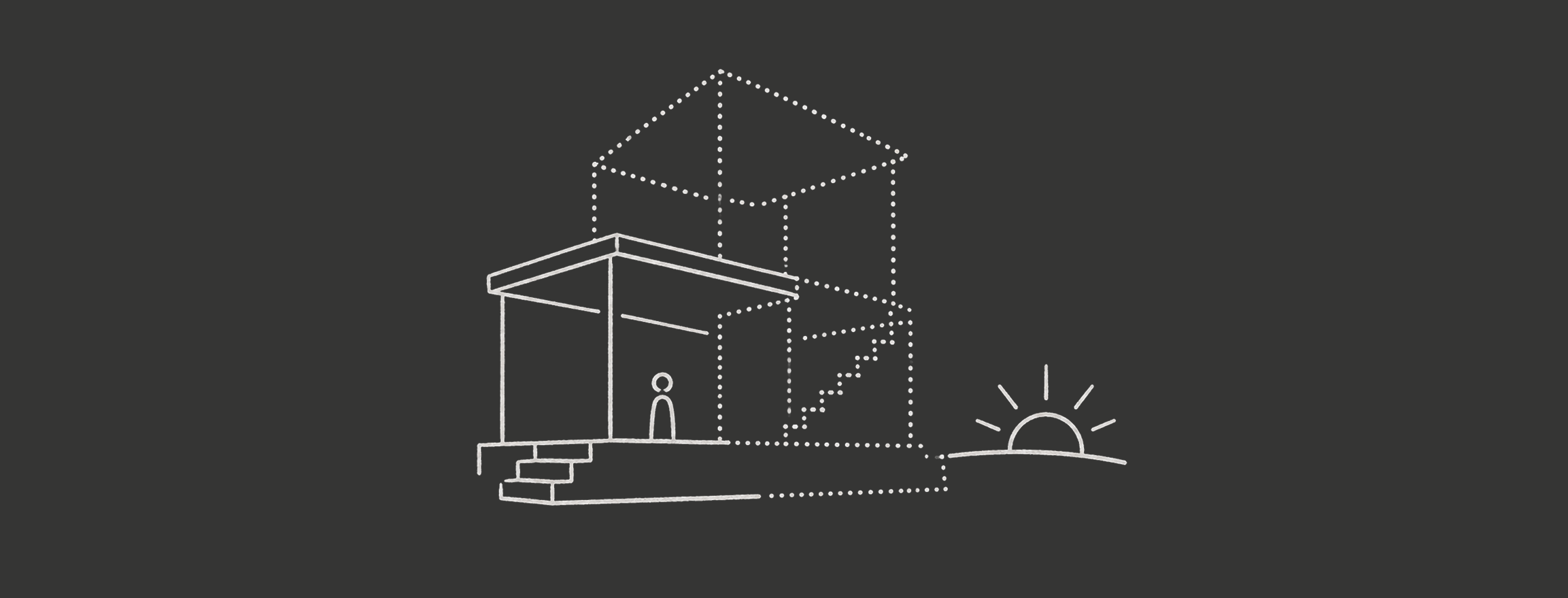
You build the scaffolding, not the building.
You preserve the question, not rush to resolution.
You engineer absence.
A purposeful void signaling something else belongs here.
You build the scaffolding, not the building. You preserve the question, not rush to resolution. You engineer absence.
Heidegger called this Gelassenheit: letting-be.
Not passive waiting, but active preservation.
Holding space open against the pressure to fill it with what merely works.
So we return.
Not because we failed.
But because the system, the real one, the one that matters, hasn't fully emerged yet.
And our job isn't to force it.
Our job is to keep the space ready.
We shouldn't build only with what exists; we must also build for what doesn't yet. Engineering should not be a mirror of available tools but a scaffolding for necessary absences. Sometimes the most important part of a system is what we leave unfulfilled, because it holds space for a future structure that hasn't yet arrived.
That, too, is design.
To build toward what must exist,
even when it cannot yet.
Especially then.